
What to Wear for Louisiana Swamp Photography
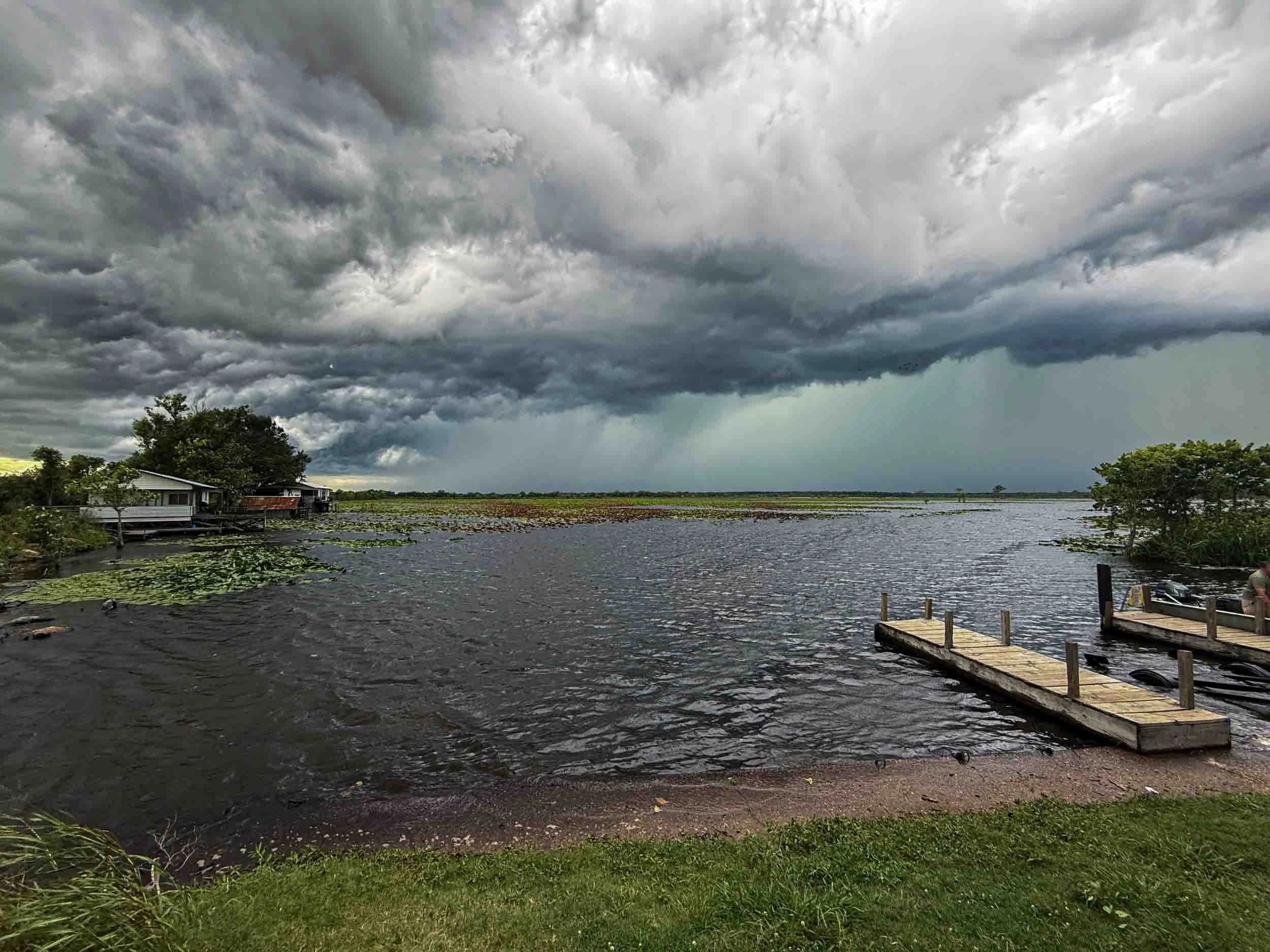
An Approaching Storm at Miller’s Lake — Always Be Prepared for Rain
Louisiana’s swamps offer wonderful photographic opportunities, from nesting wading birds in spring to colorful cypress trees in autumn. But knowing what to wear can make a big difference in how much you enjoy the experience.
After years of photographing Louisiana’s wetlands, often from small boats in the early morning, I’ve learned that our weather can be surprisingly unpredictable. Even a relatively mild morning can feel cold when traveling across open water.
Spring Photography: April Through June
Spring weather changes considerably as the season progresses.
April: Probably the most unpredictable month. I’ve experienced daytime highs in the upper 60s and lower 70s, with overnight temperatures in the 50s. Bring a light jacket and dress in layers.
May: Generally warmer, with daytime temperatures in the 80s and overnight lows commonly in the 70s. Lightweight clothing is usually comfortable, although a jacket may still be welcome during early morning boat rides.
June: Summer conditions arrive, with daytime highs frequently in the upper 80s. Lightweight, breathable clothing and sun protection become especially important.
Regardless of the month, I recommend bringing a lightweight rain jacket. Louisiana showers can develop unexpectedly.
Fall Photography: November and December
Fall is one of my favorite times to photograph Louisiana’s cypress swamps, but the weather can be remarkably variable.
I’ve experienced November and December mornings with temperatures in the 30s and 40s, while other years they’ve remained in the 60s or even lower 70s.
My advice is to bring more warm clothing than you think you’ll need.
On cold mornings, I often wear thermal underwear, several layers of clothing, a warm coat, hat, and gloves.
Remember that traveling across open water creates a wind chill effect. Even when the forecast looks comfortable, a morning boat ride can be surprisingly cold.
As temperatures rise, you can always remove layers.
Keeping Your Hands Warm
One of the challenges of photographing on cold mornings is keeping your hands warm while still being able to operate your camera.
I generally use fingerless gloves, sometimes combined with thin glove liners. On particularly cold mornings, I switch to fingerless gloves with a mitten-style cover that can be pulled back when I need to operate the camera controls.
More recently, at the suggestion of one of my tour participants, I’ve added rechargeable electric hand warmers to my cold-weather gear. They’ve been a welcome addition, particularly during those chilly early morning boat rides.
My recommendation is to bring several options so you can adjust to the conditions without sacrificing your ability to operate the camera.
These are the rechargeable hand warmers I use
Footwear: What I Wear in the Swamps
For years, I’ve relied on two pairs of L.L.Bean boots for photographing Louisiana’s swamps: their 8-inch Maine Hunting Boots and their shorter gumshoes.
My Maine Hunting Boots are now 45 years old, well worn but still in remarkably good condition. I generally prefer these taller boots for fall photography, when conditions can be colder and wetter. During spring, I usually wear the shorter gumshoes.
Both have waterproof rubber bottoms, good traction, and excellent construction. They’re particularly useful when boarding boats or walking along wet, muddy shorelines.
Good waterproof footwear with non-slip soles is one of the best investments you can make for swamp photography.
Hats for Warm and Cold Weather
In warmer weather, I wear a Tilley LTM6 Airflo hat. Its wide brim provides excellent sun protection, while the ventilated crown helps keep me comfortable.
For colder mornings, I switch to a knit watch cap that Nikon gave me years ago. A traditional military wool watch cap would be another good choice.
Sun Protection, Insect Repellent, and Camera Equipment
I prefer using a good hat and lightweight, long-sleeved clothing for protection from the sun. There’s a reason I generally avoid sunscreen and insect repellent when photographing: I’ve experienced damage to camera bodies from these products.
Some sunscreens and insect repellents can damage camera finishes, plastics, and rubber components. Products containing DEET are particularly concerning.
Of course, protecting yourself from sun exposure and insects is important. If you use these products, I recommend applying them away from your equipment, following the product instructions, and washing your hands before handling your camera.
Rain Gear: Keep It Simple
For rain protection, I use a military surplus poncho. It’s a simple, inexpensive solution that provides plenty of coverage without requiring specialized rain gear.
One advantage of a poncho is that it can cover both you and some of your camera equipment when an unexpected shower develops. It’s also easy to pack and keep handy in the boat.
Whatever rain gear you choose, I recommend bringing it on every trip, regardless of the forecast.
A Final Recommendation
Check the forecast before your trip, but remember that early morning temperatures and traveling by boat can make conditions feel considerably colder.
Dress in layers, bring appropriate rain protection, and be prepared for changing weather.
Being comfortable allows you to concentrate on what you came for: making photographs.
Explore Louisiana’s Swamps
I offer small-group photography tours during two of Louisiana’s most rewarding photographic seasons.
Spring Wading Bird Photography Tours — Photograph nesting egrets, herons, and other wading birds at Miller’s Lake and Cazan Lake.
[Explore Spring Photography Tours]
Fall Cypress Swamp Photography Tours — Photograph autumn colors, reflections, and atmospheric landscapes in Louisiana’s beautiful cypress swamps.